
Interior · 5 October 2026
How to Get Mould Out of Car Seats (and Stop It Coming Back)
What causes mould on car seats, what you can safely do yourself, and when it needs a professional treatment.
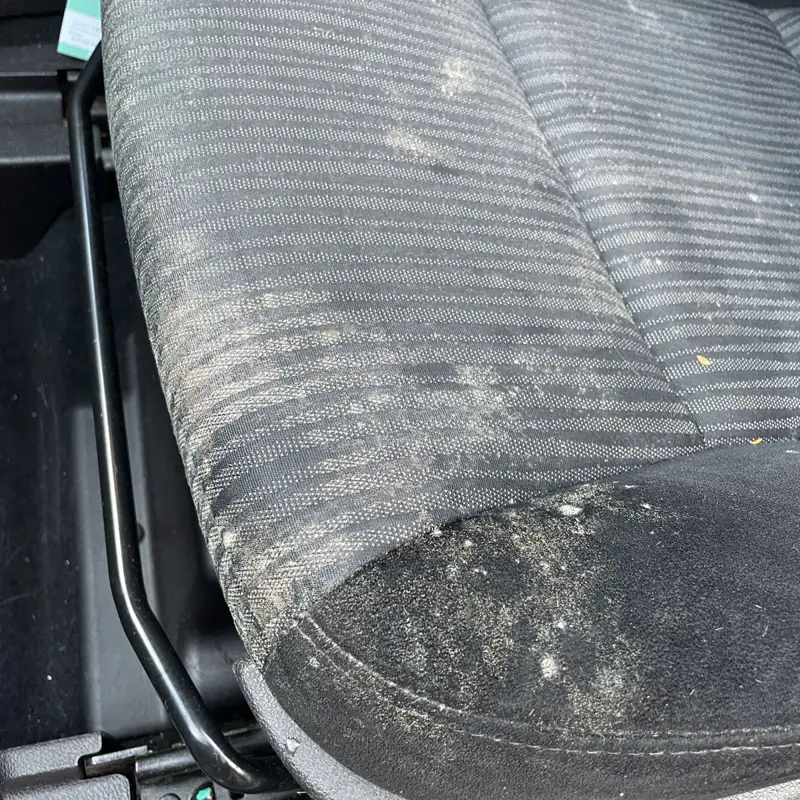
Mould on car seats usually shows up as white, green or black spots and a musty smell. It's common after a leak, a wet summer or a car left closed up for a few weeks.
Why mould grows on seats
Fabric seats hold moisture, and the foam underneath holds even more. Add warmth and a bit of food or sweat residue, and mould grows quickly. If the car has a leak, it will keep coming back until the leak is fixed.
What you can do yourself (light mould)
- Work outside with the doors open, and wear a mask and gloves.
- Vacuum the seats thoroughly to remove loose spores, then empty the vacuum outside.
- Wipe with a diluted white vinegar solution on a microfibre cloth; don't soak the seat.
- Dry the car completely in the sun with the doors open.
Avoid bleach on car fabric; it can discolour the seat and doesn't reach the mould in the foam.
When to get it treated professionally
If the mould covers large areas, has come back after cleaning, has spread to the carpets, seatbelts or headliner, or the car has been flooded, it needs a proper treatment: extraction of the fabric, an anti-mould treatment left to work, steam on hard surfaces and vents, and thorough drying.
Stopping it coming back
Find the source of the moisture first: blocked sunroof drains, worn door seals and wet mats are the usual culprits. Then keep the car aired out, don't leave damp towels or clothes inside, and clean spills straight away.
Need a hand with this?
Hot Ride does this work at your home or workplace across Sydney and the Illawarra. See the service or get a free quote.