
Paint care · 17 November 2026
Yellowed or Peeling PPF? When and How to Remove It
How long paint protection film lasts, the signs it needs to come off, whether removal damages paint and what to do with the paint afterwards.
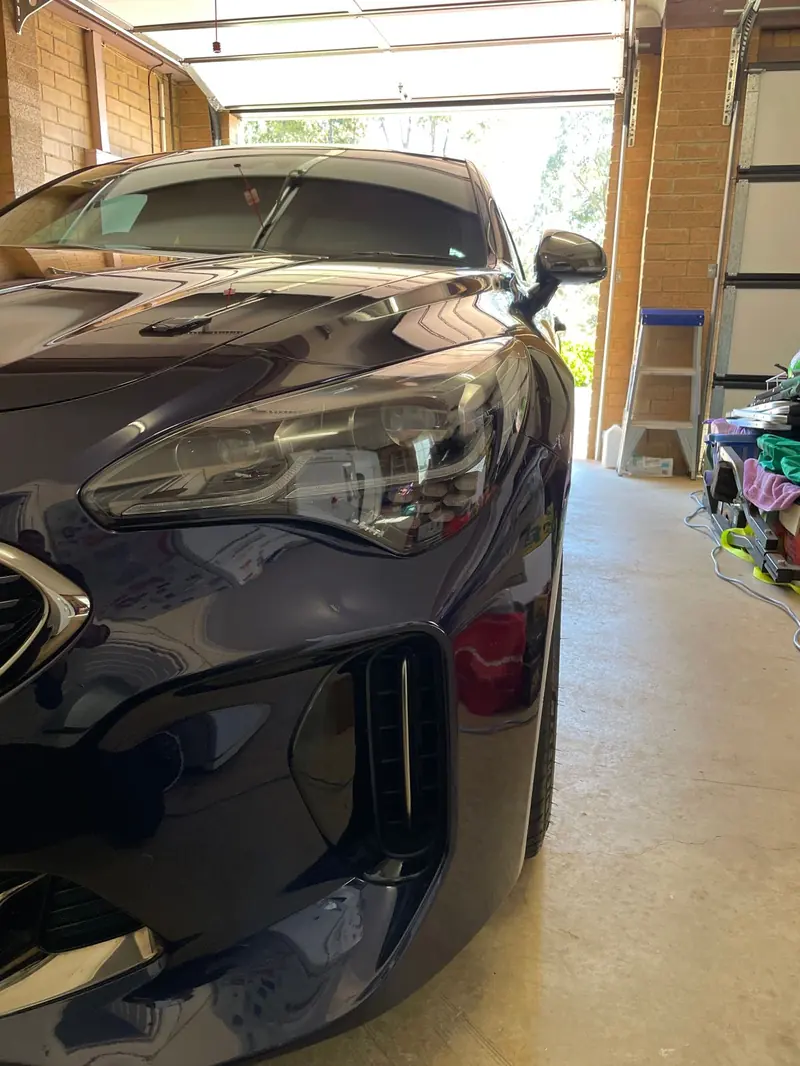
Paint protection film (PPF) should come off once it starts to yellow, crack, peel or bubble, which for most films happens somewhere between 5 and 10 years. Removing it means warming the film, peeling it slowly and cleaning off the adhesive. Old film is much harder to remove than film taken off on time, so it pays not to wait.
How long does paint protection film last?
Most paint protection film lasts around 5 to 10 years, depending on the quality of the film, how it was installed and how much sun the car gets. Cars parked outside in Sydney age their film faster than garaged cars. Older films often yellowed within a few years; modern films last longer but still wear out eventually.
The film you can see is only part of it. Underneath is a layer of adhesive, and as the film ages that adhesive bonds more strongly to the paint. That's why film taken off at the right time usually comes away cleanly, while film left on too long tears into small pieces.
How do you know when PPF needs to be removed?
The clearest signs are yellowing, cracking and edges that lift or peel. Once film shows any of these, it no longer looks like clear paint, it protects less, and it only gets harder to remove. Here's what to look for:
- Yellowing. Clear film turning yellow or brown, most obvious on white and silver cars.
- Cracking. Fine cracks or crazing across the film, usually on the bonnet and front bumper.
- Lifting or peeling edges. Edges that lift collect dirt and water, and the peeling spreads.
- Bubbles and haze. Film that has gone cloudy or bubbled across a panel.
- Stains that won't wash off. Bird droppings and tree sap can mark old film permanently.
- No more self-healing. Light scratches that used to disappear in the sun now stay.
Does removing PPF damage the paint?
On sound factory paint, removing PPF properly shouldn't damage it. Problems usually happen when the film is pulled off cold or fast, when it was fitted over a respray with weak adhesion, or when cheap film was used. Checking for resprayed panels first and taking it slowly is what keeps the paint safe.
How is PPF removed?
Professional removal follows the same basic steps every time, and patience matters more than anything else:
- Inspect. Check the film and paint, and look for resprayed panels or existing chips under the film.
- Warm the film. Heat softens the adhesive so the film lets go of the paint. Warm, not hot.
- Peel slowly. Lift an edge with a plastic tool and pull back at a low angle. Old film is done piece by piece.
- Remove the adhesive. Dissolve the glue left behind with a remover that's safe on clear coat, then wipe it off.
- Wash and check. Clean the panels, including the dirt lines along the old film edges, and check the paint in good light.
Can you remove PPF yourself?
Newer film in good condition can be removed by a careful owner with a heat gun, plastic tools and adhesive remover. Old, yellowed or cracked film is slow and frustrating: it tears into small pieces and leaves a lot of glue behind. Never use a metal blade on the paint, and don't rush it, because pulling film off cold is how clear coat gets lifted.
How long does PPF removal take?
Newer film on a bonnet and front bumper can often come off in a few hours. Old, brittle film covering a whole car can take a full day or more, because it has to be warmed and lifted in small pieces and the glue cleaned off panel by panel. The age of the film matters more than how much of the car it covers.
That's also why it's hard to give an accurate time or price over the phone. A few photos of the film, including close-ups of the worst areas, tell a professional far more than the make and model of the car.
Is it better to remove old PPF or leave it on?
If the film is still clear, smooth and stuck down, leave it on: it's still doing its job. Once it yellows, cracks or lifts, taking it off is the better choice. Lifted edges trap dirt and water against the paint, damaged film no longer stops chips properly, and every extra summer makes the adhesive harder to remove.
What to do with the paint afterwards
Paint that has been under film is usually in good condition, but it can look slightly different from the paint around it, and the old film edges often leave lines of dirt or wax. A light machine polish evens out the finish. After that you can protect it again: a ceramic coating keeps the paint glossy and easy to wash, or a PPF installer can fit new film on clean paint. Read ceramic coating vs paint protection film to compare the two.
PPF removal in Sydney
Hot Ride removes old paint protection film at your home, depot or work car park across Greater Sydney. We don't install PPF, but we take the old film off, clean up the adhesive, and can polish and coat the paint afterwards. Every job is quoted from your photos and Nick will call you to talk it through. See PPF removal, and for full vinyl wraps see car wrap removal.
Common questions
Why does PPF turn yellow?
UV light slowly breaks down the film and its adhesive. Older films yellowed sooner; modern films resist it longer but still age in strong sun.
Can yellowed PPF be cleaned?
No. The yellowing is in the film and adhesive, not on the surface, so the only fix is to remove it.
Should I remove old PPF before selling a car?
If the film is yellowed or peeling, usually yes. Tired film makes a car look neglected, and buyers often want to see the paint.
Can ceramic coating go on after PPF removal?
Yes. Once the adhesive is removed and the paint is polished, a ceramic coating bonds to the clear coat as normal.
Need a hand with this?
Hot Ride does this work at your home or workplace across Sydney and the Illawarra. See the service or get a free quote.