Caravans · 27 October 2026
Caravan Ceramic Coating: What It Is, What It Does and Is It Worth It?
What caravan ceramic coating actually is, what it protects against, how it's applied, how long it lasts and how to tell if it's worth it for your van.
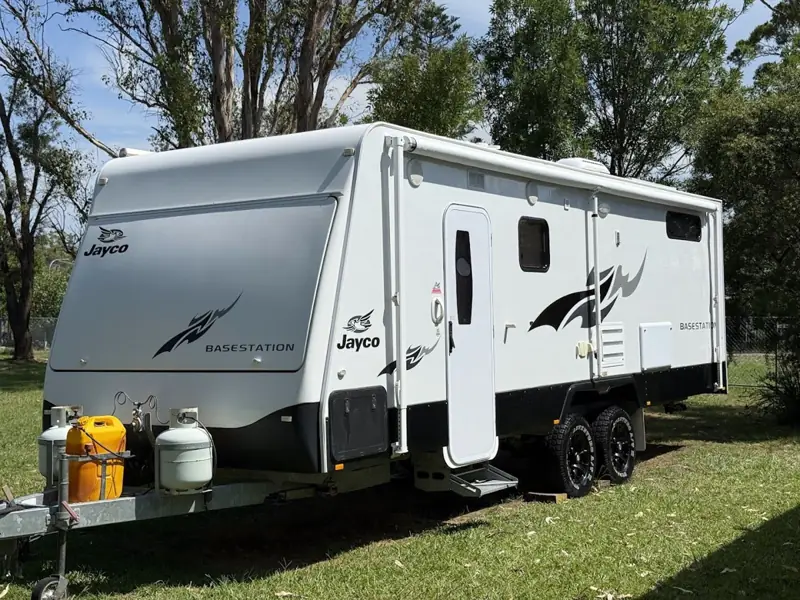
Caravan ceramic coating has become one of the most common questions we hear from van owners, and for good reason. A caravan spends most of its life outside, parked in the sun or sitting in a storage yard, and the finish takes a beating. A coating is the most effective way to keep it looking new with far less scrubbing.
Here's a plain-English guide to what a caravan ceramic coating is, what it can and can't do, and how to decide whether it's worth it for your van.
What is caravan ceramic coating?
A ceramic coating is a liquid that's applied to the outside of the van and cures into a thin, hard, transparent layer. It bonds to the gelcoat, paint and decals, so the surface itself no longer meets the weather directly. Most coatings are based on silicon dioxide, blended with other ingredients that help them bond and last.
Caravan coatings are formulated for the materials vans are actually made from: fibreglass and gelcoat, painted aluminium, composite panels, decals and plastic trims. That's different from a car coating, which is designed mainly for painted steel and clear coat.
What does it protect against?
- Black streaks. The grime that runs down from awning rails, windows and the roof has far less to grip on, so it rinses off instead of staining.
- UV and oxidation. The Australian sun is what turns fibreglass chalky and fades graphics. A coating adds a UV-resistant layer that slows that down.
- Bird droppings, bat droppings and sap. These are acidic and can etch the surface if left on. A coating buys you time to wash them off.
- Road grime and bugs. Bug residue on the front cap and road film along the sides come off much more easily.
- Salt. Coastal trips leave a salty film. A coated surface releases it with a rinse.
What a coating won't do is stop stone chips, hail damage or deep scratches. It's a protective layer, not armour. Owners who want impact protection on the front cap usually add a stone guard or protection film there as well.
How is it applied?
The preparation matters more than the product. A good job looks like this:
- A thorough wash of the whole van, roof included.
- Removal of black streaks, bug residue, sap and any existing wax.
- Decontamination to lift bonded grime.
- Light machine polishing where the finish has oxidised, so the coating locks in a clean surface rather than a chalky one.
- The coating applied panel by panel, then left to cure, ideally out of the rain.
With OptiVAN, the package we use, the interior is protected as part of the same job.
How long does it last?
That depends on the product, how well the van was prepared and how it's looked after. A quality caravan coating lasts years, not months, which is the big difference from wax. OptiVAN comes with a lifetime warranty covering both the exterior and interior protection on caravans no older than 5 years. Older vans can still be protected; the warranty terms just differ, and we explain what applies when we quote.
Ceramic coating vs wax and polish
Wax and polish look great for a few weeks, then they wash away and the job starts again, usually on a ladder. A ceramic coating takes more work up front but lasts for years, and day-to-day cleaning becomes a rinse and a gentle wash. We compare them in detail in caravan ceramic coating vs wax.
Is caravan ceramic coating worth it?
It usually is if any of these sound like you:
- Your van is new or nearly new and you want to keep it that way.
- It's parked outside, under trees or near the coast.
- You're tired of scrubbing black streaks every few weeks.
- You plan to sell or trade the van in a few years and want it to hold its value.
It's less worthwhile if the van is due for a full repaint, or if the gelcoat is badly cracked. In that case the surface needs repair first.
Does it matter if it's called graphene or ceramic?
Less than the marketing suggests. Preparation, application and the warranty behind the product matter far more than the label. We explain the difference in graphene vs ceramic coating for caravans.
Looking after a coated caravan
- Rinse it after every trip, especially after coastal or dusty roads.
- Wash with a pH-neutral caravan wash and a soft brush or mitt.
- Avoid harsh degreasers and abrasive pads.
- Remove droppings and sap as soon as you can.
Our guide on how to wash a caravan goes through it step by step.
Common questions
Can you ceramic coat an older caravan?
Yes. Older vans are cleaned, have black streaks and light oxidation removed, then coated. The result depends on the condition of the gelcoat, and warranty terms differ for vans over 5 years old.
Does a ceramic coating stop black streaks completely?
It doesn't stop grime landing on the van, but it stops it bonding, so streaks rinse off instead of staining.
Can the coating be applied where my van is stored?
Yes, at home or in a storage yard, as long as there's water and power near the van and room to work all the way around it.
Is the interior protected too?
With OptiVAN, yes. The interior is protected as part of the same package as the exterior.
How do I get a quote for my van?
Send the make, length and a few photos through the quote form, or call us. Every van is assessed individually.
Need a hand with this?
Hot Ride does this work at your home or workplace across Sydney and the Illawarra. See the service or get a free quote.