
Caravans · 6 October 2026
Caravan Oxidation: How to Fix a Chalky, Faded Caravan
Why caravan fibreglass and paint go chalky, how to tell how bad the oxidation is, how it's removed properly, and how to stop it coming back.
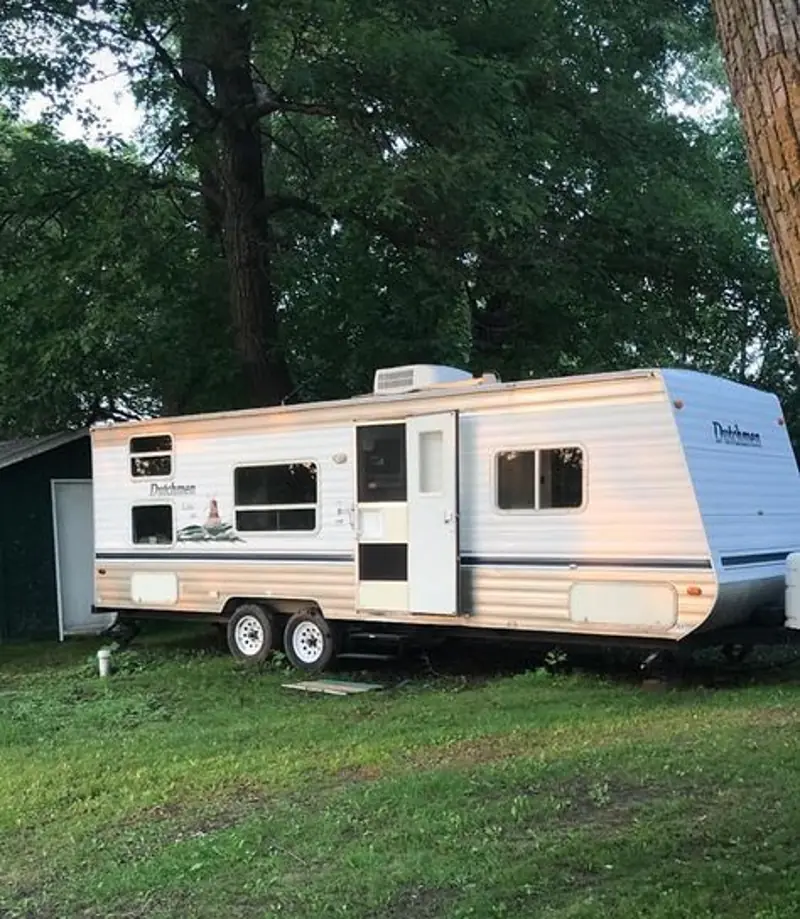
Run your hand along the side of an older caravan and there's a good chance it comes away white. That powdery film is oxidation, and it's one of the most common problems we see on vans that have spent a few Australian summers parked in the sun. The van looks faded and flat, dirt sticks to it more easily, and washing never quite brings the shine back.
The good news is that in most cases caravan oxidation can be fixed, and once it's fixed it can be stopped from coming back. This guide explains what's actually happening to the surface, how to judge how bad it is, and what the repair involves.
What is caravan oxidation?
Most caravans in Australia are clad in either fibreglass composite panels with a gelcoat finish, or painted aluminium. Both have a hard, glossy outer layer that protects the material underneath. Over time, UV radiation from the sun breaks down the resins and pigments in that outer layer. The surface starts to lose its gloss, then its colour, and eventually it turns into a fine powder that sits on top of the panel.
That powder is what you see on your hand or on a microfibre cloth. It's the top layer of the finish slowly breaking down, and it doesn't stop on its own. The longer it goes, the deeper it gets.
Oxidation is different from dirt. Dirt sits on the surface and washes off. Oxidation is the surface itself, so no amount of washing or scrubbing will bring the colour back. In fact, scrubbing an oxidised panel with a harsh brush or a melamine sponge just wears it away faster.
Why caravans oxidise faster than cars
A car is usually driven most days, garaged at night or at least parked in different spots, and washed regularly. A caravan often spends months in the same spot, side-on to the afternoon sun, with nothing protecting it. On top of that:
- Gelcoat is more porous than automotive clear coat, so it soaks up UV and contaminants more readily.
- Caravans are big, flat and white, which shows every bit of fading and staining.
- Many vans are never polished or protected after leaving the dealer.
- Coastal air, red dust and highway grime sit on the surface for weeks between trips.
If you want to understand everything that attacks a van's exterior, our ultimate guide to caravan paint protection covers UV, salt, pollution and abrasion in more detail.
How to tell how bad it is
Before deciding on a fix, it helps to know what stage your van is at. Wash and dry one panel first, then check it in daylight.
- Light: the finish looks a little dull, but nothing comes off on a cloth. The colour is still even.
- Moderate: a white or coloured residue comes off on your hand or a dark cloth. The panel looks flat and slightly patchy.
- Heavy: thick chalk on the surface, obvious fading on the sunny side compared with the shady side, and decals that have dried out or cracked.
- Severe: the gelcoat feels rough, has fine cracks or crazing, or the fibreglass weave is starting to show through.
Light and moderate oxidation can almost always be corrected. Heavy oxidation usually can too, but it takes more time and more cutting. Severe damage, where the gelcoat itself is cracked or worn through, may need repair or repainting rather than polishing.
How caravan oxidation is removed
The only proper fix is to take off the damaged layer and expose the healthy finish underneath. This is machine work, and it's done in stages.
First, the van is washed thoroughly to remove loose dirt, then decontaminated to lift bonded grime, tree sap, bug residue and old wax. Black streaks are removed at this stage too. If you're dealing with those as well, see our guide on how to remove black streaks from a caravan.
Next comes the cut. A machine polisher with a firmer pad and a compound gently levels off the oxidised layer. On a heavily chalked van this step does most of the work, and the colour comes back as the dead layer is removed. Decals, rubber seals, windows and badges are masked or worked around carefully, because compound and heat can damage them.
Then a finer polish refines the surface and brings back the gloss. On gelcoat, the difference between a cut panel and a polished panel is easy to see: the polish is what gives that wet, factory look.
Finally, the panel is wiped down to remove polishing oils, so whatever goes on next can bond properly.
Can you fix caravan oxidation yourself?
You can, if the oxidation is light and you're comfortable with a machine polisher. Hand polishing a whole van is hard going, and on anything beyond a light haze it rarely removes enough of the damaged layer to make a real difference.
A few things to keep in mind if you give it a go:
- Start with the least aggressive pad and product, and test on a small area first.
- Keep the pad flat and moving, and stay well away from edges, decals and seals.
- Don't use cutting compound on decals or stripes. They're thin and will lift or fade.
- Work in the shade on a cool panel. Polishing in direct sun makes products dry out and smear.
- Be realistic about time. A full cut and polish on a large van is a long day or more for an experienced detailer.
If you're not sure, or the van is valuable, get a professional opinion first. Removing too much gelcoat can't be undone.
The step most people skip: protection
Here's the part that matters most. Once oxidation is removed, the freshly polished surface is completely bare. Leave it like that, and the sun will start breaking it down again straight away. Within a year or two you can be right back where you started, with a little less gelcoat to work with.
That's why correction should always be followed by protection. Wax helps for a few weeks, but it doesn't last long on a van that lives outdoors. If you're weighing that up, we compare the options in caravan ceramic coating vs wax.
A ceramic coating made for caravans bonds to the surface and forms a hard, slick layer that takes the UV and grime instead of the gelcoat. At Hot Ride we use OptiVAN, a coating made specifically for caravans and motorhomes. You can see how the process works on our caravan protection page.
How to stop oxidation coming back
Even with a coating, a few habits make a big difference:
- Park the van in shade or under a carport where you can, and turn the sunniest side away from the afternoon sun.
- Wash it after every trip, especially after coastal or dusty roads.
- Use a pH-neutral caravan wash, not dishwashing liquid or degreaser.
- Never use abrasive pads, melamine sponges or stiff brushes on the body.
- Check decals and seals while you wash, and deal with small problems early.
For more on sheltering a van between trips, see our tips on how to protect your caravan from the sun.
Does oxidation affect resale value?
Yes, quite a lot. A chalky, faded van looks older than it is, and buyers often assume it hasn't been looked after in other ways either. A van with a bright, glossy finish photographs better online and gives buyers more confidence. Correcting oxidation and protecting the finish before you sell is often money well spent compared with what a tired-looking van loses at sale time.
Caravan oxidation FAQs
How long does it take for a caravan to oxidise?
It depends on how much sun the van gets and whether it's protected. An unprotected van parked in full sun can start to look dull within a couple of years, and chalky within a few more. A van stored under cover and protected can stay glossy for many years.
Can I just paint over oxidised gelcoat?
Painting is an option for gelcoat that's cracked or worn through, but it's a big job and changes the finish. For light to heavy oxidation, machine polishing is usually the better first step, because it brings back the original finish without repainting.
Does caravan oxidation removal take off the decals?
It shouldn't. A careful detailer works around decals and stripes rather than polishing over them. Decals that are already cracked, dry or lifting may be best replaced, because polishing can't restore them.
Will a caravan wash fix chalky fibreglass?
No. A wash removes dirt sitting on top of the surface, but oxidation is the surface itself breaking down. Washing will leave the panel clean but still faded. The chalky layer has to be polished off.
Is it the same process for painted aluminium vans?
Very similar. Painted aluminium cladding oxidises too, and it's corrected with machine polishing in the same way. Some older painted panels are thinner, so a careful, gentle approach is important.
What about motorhomes and camper trailers?
Exactly the same. Motorhome bodies and camper trailer panels are usually gelcoat or painted aluminium, and they oxidise in the same way. The cab of a motorhome has automotive paint and is treated like a car.
How often should a corrected van be checked?
Look at the finish every few months while you wash. If water stops beading or sheeting off a coated van, or the gloss starts to fade on the sunny side, it's time for a check before oxidation gets a foothold again.
Wrapping up
Caravan oxidation is the gelcoat or paint breaking down under UV. It can't be washed off, but in most cases it can be machine polished away to reveal the healthy finish underneath. The key is to protect that finish straight afterwards, or the sun will undo the work.
If your van is starting to chalk up, Hot Ride can assess it at your home or storage yard across Sydney and the Illawarra. Send a few photos through the quote form and we'll let you know what's involved.
Need a hand with this?
Hot Ride does this work at your home or workplace across Sydney and the Illawarra. See the service or get a free quote.