
Caravans · 6 October 2026
Caravan Storage Tips: How to Store a Caravan Long Term
A practical checklist for storing your caravan between trips or over winter: cleaning, covers, tyres, batteries, gas, mould prevention and regular checks.
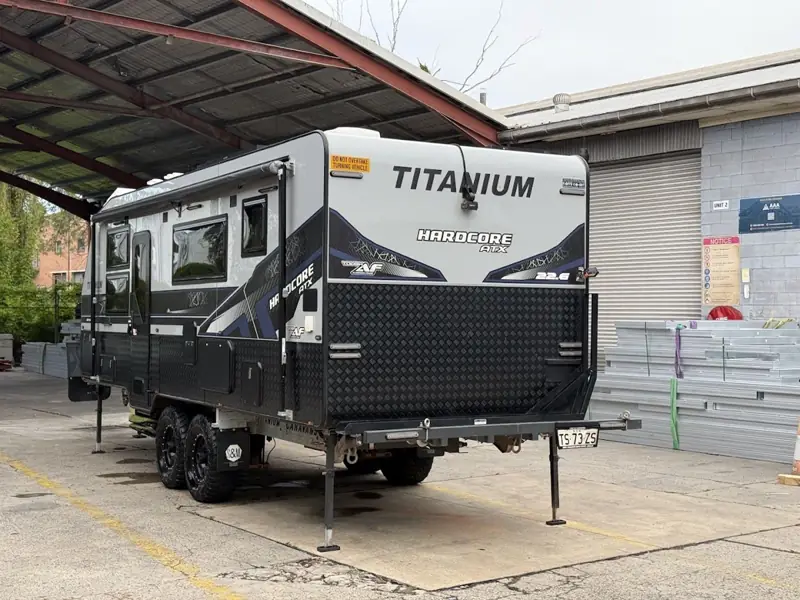
Most caravans spend far more time parked than on the road. Whether yours sits in the driveway between school holidays or goes into storage for months over winter, the way it's stored makes a big difference to its condition when you next head off.
A van that's put away dirty, damp or closed up tight can come out with mould inside, flat batteries, cracked tyres and black streaks on every wall. A bit of preparation avoids all of that. Here's a practical checklist for storing a caravan long term.
Choose the right spot
Where you store the van matters as much as how you store it.
- Undercover is best. A shed, carport or covered storage yard keeps the sun and rain off.
- If it must be outside, choose firm, level ground with good drainage, away from trees.
- Check access and security, especially at a storage yard. Ask whether there's water and power available nearby, which makes maintenance and any professional work much easier.
- Avoid spots where sprinklers hit the van. Reclaimed or bore water can leave stubborn mineral spots.
Clean the outside before storing
Never put a caravan away dirty. Road grime, bug residue, bird droppings, tree sap and coastal salt keep working on the surface while the van sits, and they're far harder to remove after a few months.
Wash the van from the roof down with a pH-neutral caravan wash. Remove any black streaks while they're fresh. Our guide on how to remove black streaks from a caravan explains how to do it safely. Dry the van fully before covering it or closing it up.
If the walls are already chalky or faded, it's a good time to deal with that before another season in storage. Read more in our guide to caravan oxidation.
Protect the exterior
A van that's going to sit outside for months needs protection on its surface. A ceramic coating made for caravans keeps UV and grime off the gelcoat, so the van comes out of storage looking the way it went in, and a quick rinse is usually all it needs before the next trip. Wax helps for a few weeks but won't last a whole storage season outdoors. We compare the options in caravan ceramic coating vs wax.
To cover or not to cover?
A good, breathable caravan cover can help when the van is stored outside, but a bad one can cause problems.
- Use a cover made for caravans, sized to fit, and breathable so moisture can escape.
- Don't use plastic tarps. They trap moisture, and they flap in the wind and scuff the finish.
- Only cover a clean, completely dry van.
- Tie it down securely, and pad any sharp corners that could wear through.
- Lift it and check underneath every few weeks.
Clean and dry the inside
Mould is the biggest problem inside stored caravans. It grows wherever there's moisture, warmth and something to feed on, which is exactly what a closed-up van offers.
- Remove all food, including sealed packets. They attract pests.
- Take out bedding, towels, clothing and anything made of fabric that can be taken home.
- Vacuum thoroughly, including under cushions and in cupboards.
- Wipe down benches, cupboards and the fridge.
- Leave the fridge and freezer doors ajar so they don't go mouldy.
- Prop up mattresses and cushions so air can circulate.
- Place moisture absorbers in the van, especially in cupboards and the bathroom.
- Leave roof vents slightly open if it's safe to do so, so air can move.
The same principles apply as in a car. If you've ever dealt with mould in a vehicle, our guide on how to get mould out of car seats explains why it grows and how to stop it coming back.
Water system
Drain the fresh water tanks, hot water system and lines if the van will be stored for a long time, following the manufacturer's instructions. Empty and clean the grey water and toilet cassette tanks completely, and leave them open to dry where recommended. Stagnant water grows bacteria and smells, and can damage the system.
Gas and electrical
- Turn off the gas bottles at the valve, and consider storing them separately if your storage yard requires it.
- Turn off all appliances and lights.
- Look after the battery. A battery left connected and unmaintained can go flat and be damaged. Either connect it to a suitable maintenance charger or solar setup, or disconnect it and charge it every few weeks.
- Check that the solar panel isn't covered by a cover if you're relying on it for charging.
Tyres, wheels and chassis
- Inflate the tyres to the recommended pressure before storing. Under-inflated tyres develop flat spots.
- Fit tyre covers to protect them from UV.
- Chock the wheels securely.
- If the van will be stored for many months, move it slightly every so often to change the contact point on the tyres.
- Lower the stabiliser legs to take some weight, but don't use them to lift the van's weight off the wheels unless the manufacturer allows it.
- Check the brakes and wheel bearings before your next trip, especially after a long storage period.
Keep pests out
Mice, rats, insects and spiders love stored caravans. Remove food, block gaps around pipes and cables where it's safe to do so, and consider pest deterrents. Check inside regularly for droppings or nests, especially in cupboards and around the wiring.
Check on it regularly
A van in storage still needs attention. Every few weeks, try to:
- Open it up and air it out on a dry day.
- Check for leaks, damp patches, mould and pests.
- Check the battery charge and tyre pressures.
- Rinse off dust, bird droppings and leaves.
- Check the cover for wear and secure fit.
Before your next trip
When it's time to head off again, give the van a proper once-over: wash it, check the tyres, brakes, lights and seals, reconnect and test the gas and electrics, flush and refill the water system, and air out the interior. If the van is coated, the outside usually just needs a rinse and a wipe.
Caravan storage FAQs
How do I prevent mould in a stored caravan?
Remove fabrics and food, clean and dry everything, prop up cushions and mattresses, leave the fridge open, use moisture absorbers and allow some ventilation. Check the van every few weeks and air it out on dry days.
Should I store my caravan with the jacks down?
Lowering the corner stabilisers helps keep the van steady, but they're generally not designed to take the van's full weight. Check your manufacturer's advice before lifting any weight off the wheels.
Is it better to store a caravan at home or at a storage yard?
It depends on space, security and council rules. Home storage makes regular checks easier. A covered storage yard can offer shade and security. Either way, choose a spot with good drainage, away from trees, and ideally with access to water and power.
How often should I start or use a stored caravan?
Try to check on it every few weeks, and take it for a short tow every few months if possible. Moving the van changes the tyre contact patch, gets the bearings turning and lets you check that the brakes and lights still work.
Do I need to service my caravan after long storage?
It's a good idea. A pre-trip check of the brakes, bearings, tyres, lights, gas fittings and seals can catch problems before they become breakdowns on the road.
What's the best way to keep the outside clean during storage?
Clean and protect the exterior before storage. A coated van sheds dust and grime more easily, and a rinse every month or two stops it building up on the roof. A breathable, well-fitted cover helps too.
Can Hot Ride work at my storage yard?
Yes, as long as there's water and power available near the van and enough space to work all the way around it. Many owners book protection while the van is in storage, so it's ready to go for the next trip.
What should I do with the gas bottles?
Turn them off at the valve and follow your storage yard's rules. Some yards require gas bottles to be removed and stored separately.
Wrapping up
Good storage is mostly about three things: keeping the van clean, keeping it dry, and keeping the sun off it. Clean it inside and out before putting it away, protect the exterior, control moisture inside, look after the battery and tyres, and check on it regularly.
Hot Ride applies OptiVAN ceramic coating to caravans and motorhomes at your home or storage yard across Sydney and the Illawarra, as long as there's water and power near the van. See how it works on our caravan protection page, and read our tips on how to protect your caravan from the sun.
Need a hand with this?
Hot Ride does this work at your home or workplace across Sydney and the Illawarra. See the service or get a free quote.